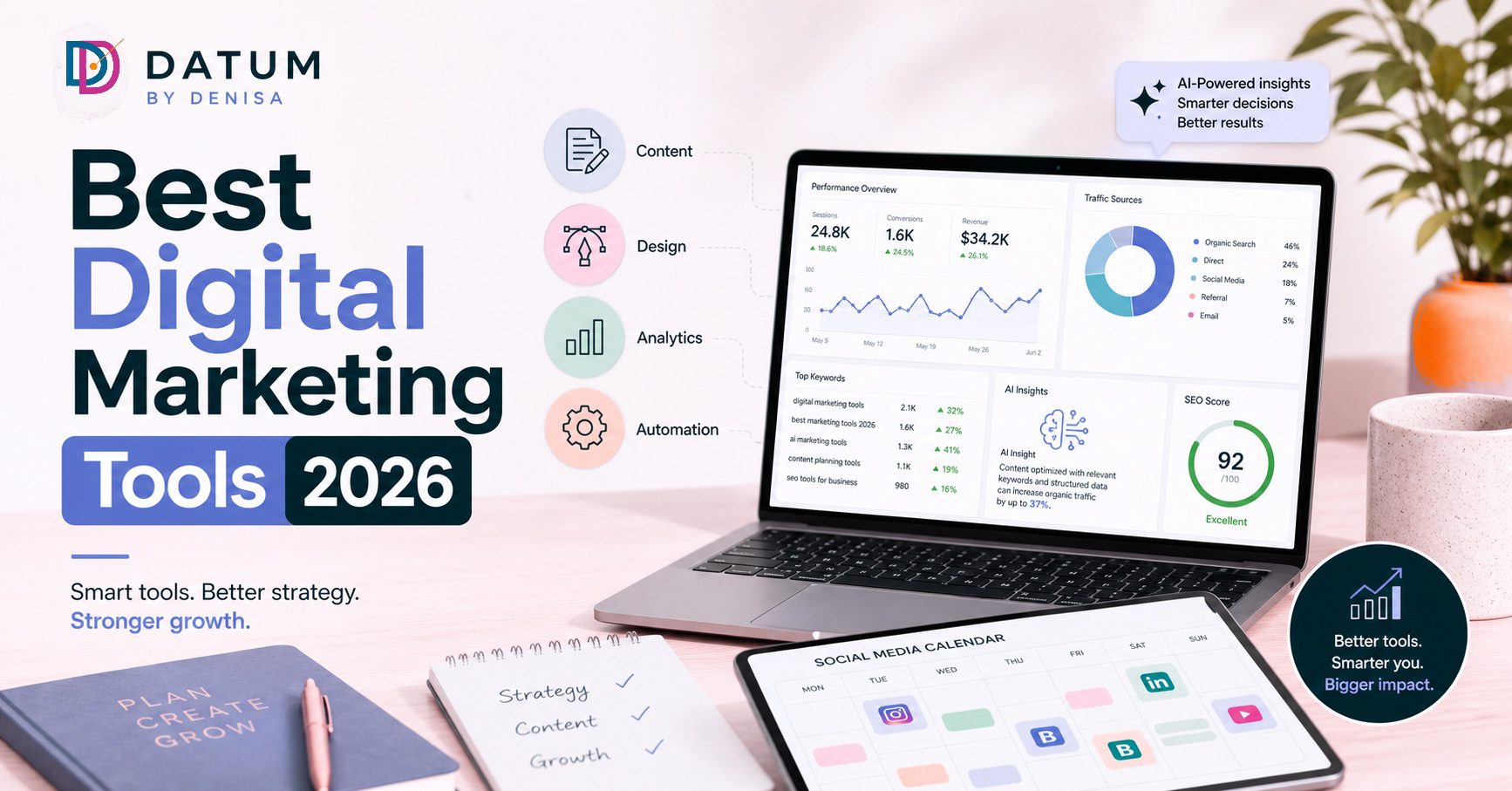
In 2026, the best digital marketing tools are the ones that help you work smarter, stay consistent, and grow without adding unnecessary complexity. For freelancers, small businesses, and creative brands, the right stack can save time, improve visibility, and make everyday marketing much easier.
The best tools are the ones that support research, SEO, content creation, social scheduling, analytics, design, and automation. For small businesses, that usually means a mix of AI, SEO, email, social media, and visual design tools.
1. Perplexity for faster research and content planning
Perplexity AI is a strong research tool for marketers who want quick, source-based answers without spending hours searching across tabs.
2. Nano Banana for branded images and logos
Nano Banana is useful for creating images and brand logo concepts quickly, especially when you want visual ideas before investing in a full design process. For creative brands and freelancers, this can speed up early-stage branding, moodboarding, and content mockups.
3. Cytd AI for AI visibility
Cytd AI is relevant for brand visibility in AI-driven search and discovery. As more people use AI tools to find answers, brands need to think beyond traditional SEO and consider how their content can appear in AI-generated responses.
4. Canva for visual content and brand consistency
Canva remains one of the most practical tools for visual marketing because it makes design accessible without needing advanced design software. I use it to create social graphics, blog visuals, pitch decks, brand assets, and content templates that keep a consistent look across platforms.
5. Metricool for social media scheduling and reporting
Metricool is a strong choice for managing social media posts, content calendars, and performance tracking. For a small business, the value is in having planning, scheduling, and analytics in one place instead of juggling multiple tools. It makes it easier to plan content in advance, track what works, and keep campaigns organised without feeling overwhelmed.
6. Google Trends for trend research and keyword ideas
Google Trends is one of the simplest ways to understand what people are searching for and when interest is rising or falling. I use it for trend research, product and service topic ideas, seasonal planning, and keyword discovery. It solves the problem of publishing content too early, too late, or on topics that no one is actively searching for.
7. Figma for website planning and wireframes
Figma is ideal for website design planning, wireframing, and visual structure before development begins. I use it when mapping pages, layout ideas, and content flow so that a website feels clearer and more strategic before anything is built.
8. Claude for content analysis and brand voice consistency
Claude is a useful tool for analysing content, improving readability, and checking whether copy sounds consistent with a brand voice. It can feel more natural than many other AI tools, although the output still depends heavily on the prompt and the quality of the brief.
9. HubSpot for CRM and marketing automation
HubSpot is one of the strongest tools for managing leads, email, CRM, and customer journeys in one place. It is especially valuable when a business wants to connect marketing activity to actual pipeline and client relationships.
10. Google Analytics for performance tracking
Google Analytics is essential if you want to understand what is happening on your website. It helps track traffic sources, behaviour, conversions, and page performance, which makes it easier to improve content and campaigns over time.
11. Semrush for SEO and competitor research
Semrush is one of the strongest all-in-one tools for SEO, keyword research, and competitor analysis. It is especially useful when you want to identify ranking opportunities, compare visibility, and plan content around search intent. For freelancers and small business owners, Semrush solves the challenge of not knowing which keywords are worth targeting. It gives a clearer picture of demand, competition, and content gaps.
12. Mailchimp for email marketing
Mailchimp is still a practical choice for email campaigns, automations, landing pages, and audience segmentation. For small businesses, email remains one of the easiest ways to stay connected with customers and nurture repeat engagement.
13. F5Bot for lead and mention alerts
F5Bot is useful for tracking mentions, opportunities, and relevant conversations online. For small businesses and freelancers, this can help surface leads, brand mentions, or niche discussions without manual monitoring.
Which digital marketing tool do you rely on most in 2026? Share your favourite in the comments bellow.
If you want support choosing the right tools for your brand, explore my digital marketing services here.
References:
- HubSpot (2026) The 28 Best Digital Marketing Tools. Available at: https://blog.hubspot.com/marketing/digital-marketing-tools.
- Precision Strategies (2025) The Five Biggest Digital Marketing Trends in 2026. Available at: https://www.precisionstrategies.com/the-five-biggest-digital-marketing-trends-in-2026/.
- HubSpot (2026) 2026 State of Marketing Report. Available at: https://www.hubspot.com/state-of-marketing.
Leave a Reply